Warehouses in the USA and the UK for shipping within the European Union quickly and with no customs.

FAQ - Choosing a Tenkara Rod - Forum

About Tenkara Tenkara Rods tenkara lines tenkara videos tenkara flies

February 14 2013

The Art of NOT False Casting

by TJ Ferreira

False casting has a certain romantic magic about it when it is done out on a river. Enough romance with false casting that it can be considered that money shot in a film or money shot while demonstrating how to cast a fly rod.

At this year’s International Sportsman Expo (ISE for short), Tenkara USA had a booth right near the main casting pool.  It was a great spot where we could easily escort folks fascinated with tenkara over to the pool, lean over the curtain, and start casting away at the targets in the pool, even as other people zipped their lines right past our ears. We didn’t need much space.

Read the rest of this entry »

Print

February 27 2012

Pleasanton Fly Fishing Show Recap

The Pleasanton show ended yesterday, took me about a day to recover. What a show! For tenkara, this was the apex of the fly fishing show season, and the beginning of the “year of tenkara”.

This time the impression that we had a busy booth was confirmed  by multiple reports that indeed we had the busiest booth in the show! Our inventory dissipated like crazy despite the careful planning with experience from previous show. So, yes, I’m stoked – the tenkara community grew considerably this weekend.

Connecting with customers in person was certainly the highlight for our team. A new tenkara adopter, Mike Sevon and his wife wrote to us after the show,  ”Tillie and I  really enjoyed the show and being able to handle the different Tenkara rods was the highlight.  I spent the entire day on the internet learning as much as I could about Tenkara…Since we only bought one Tenkara rod, the 12 foot Iwana, I have a feeling we will be fighting over this rod until I get another one.”

Tenkara casting demo at Plesanton Show photo by Mike Sevon

Photo by Mike Sevon

TJ, our customer service face, and Masaki lent us their very passionate and energetic enthusiasm for all three days. It wouldn’t have happened without their help. They helped customers left and right and allowed me to give a couple of demonstrations or interact with other vendors and friends. A winning team.

Tenkara USA booth at Pleasanton Fly Fishing Show

The casting demonstrations again served to dispel the “myth” that tenkara is dapping. I couldn’t keep track of the number of people who stopped by our booth and said, “oh, so it’s just like dapping…”. I would respond that no, it is not, and invite them to watch the casting demo a few minutes later, or take them behind the booth and let them cast the rods themselves.

Tenkara casting demonstration at Pleasanton Fly Fishing Show

Next up, Pasadena! Please join us next Saturday and Sunday at the Fly Fishing Show in Pasadena. 

Print

February 08 2012

“Tenkara is not dapping” campaign

Tenkara is not dapping, tenkara fly casting

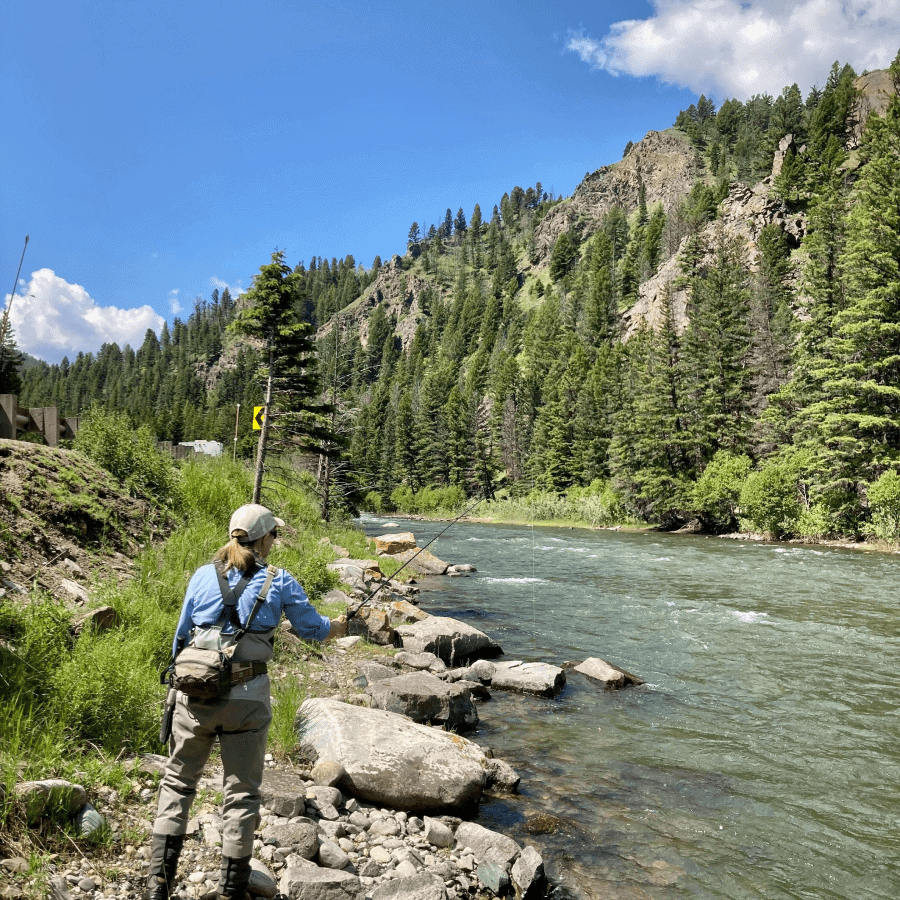
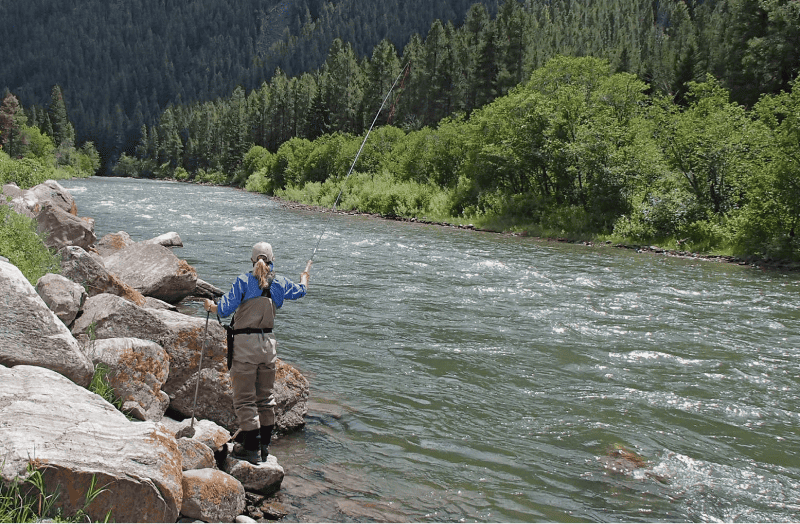
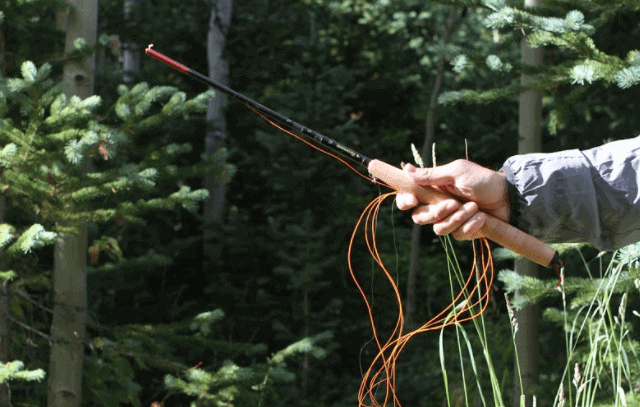
The most common misconception about tenkara it that it is just dapping – that because the line is tied to the tip of the rod, it is only lowered onto the water instead of cast as is done with western fly casting. At the recent fly fishing shows we attended, it was clear that a lot of people had heard of tenkara, at least in passing at this point, but a vast majority would say, “yes, I heard about it, it’s that dapping technique from Japan…” This assumption is all to common among those who have never tried it, but luckily very quickly dismissed by anyone who has or who has seen it in person. I pleaded the organizers of the Fly Fishing Show to give me sometime on the show’s ponds to demonstrate the casting techniques, and that was a huge eye opener to many attendants.

As the first company outside of Japan focused on introducing the method to others, a huge part of what we need to do is education of the public. In this stage in the game, we will be focusing on a new campaign: “Tenkara is Not Dapping”.  The first two products of the campaign are based on the photography and video clips taken by Brian Flemming of www.learntenkara.com.

We’d love to count on your help to post pictures, and videos showing that it is a method of fly fishing where casting is involved. Please inundate the web with the message that “Tenkara is not dapping”!

Print

November 05 2009

American Angler magazine

We were very happy to learn that the newest issue of American Angler magazine (November/December 09) contains an article on tenkara fly-fishing. Unfortunately, there were a few mistakes made in the article. As the authority on tenkara, we feel the obligation to share some corrections. The article perpetuates some of the “myths” and misconceptions about tenkara, namely that it is all about dapping, and there is no casting involved. It also states that tenkara evolved from a method of fishing done by the samurai. As a result it does not give an accurate picture of tenkara to readers, and in fact builds on the thoughts found in some online forums by anglers who have never tried or seen tenkara in person.

The authors refer to dapping seven times throughout the article, and also say “no casting!” in reference to the ease of teaching fly fishing to kids via tenkara, but only talk of casting twice (and once in connection with dapping). Anyone who has tried tenkara will agree dapping is one of the least used techniques in tenkara fly-fishing (see our forum for discussion). Actual casting is necessary and tight loops are an integral part of tenkara fly-fishing. Dapping is a very limiting technique where one either lowers the fly to a spot, thus allowing for no reach, or where one uses the wind to blow his line into place. We wrote a post on how tenkara is not dapping in August: http://www.tenkarausa.com/blog/?p=257 . They also write “[tenkara is] an easy way to introduce kids to fly fishing (no casting!)”. True, it’s a very easy way to introduce kids to fly-fishing, but not because there is no casting; in fact it is a great way to teach kids how to properly fly cast. The article also says, “perhaps the most recognizable modern equivalent is Czech nymphing, the style of close high-stick indicatorless nymphing”. Czech nymphing is only one of the techniques that can lend itself well to the use of tenkara gear, and it’s primarily one that is being used here in the US as a form of adaptation of the tenkara. Generally, tenkara is more similar to using a soft-hackle wet fly, and tenkara anglers hardly use heavy nymphs. One would be more concerned to casting delicately to a rising fish or to a likely spot than swinging a heavy fly on the bottom. Tenkara is about casting tight loops, for delicate and accurate presentations.

Accurate casting is a big part of tenkara

Accurate casting is a big part of tenkara

Here’s a new video we just posted on tenkara casting

The article also says, “In the Japanese equivalent of the Middle Ages, the ruling samurai class used a simple style of dapped-fly fishing as a practice to refine their swordsmanship and balance, meanwhile banning all others from fishing. Later, after the fall of the samurai, professional fishermen (some of them innkeepers looking to supply their kitchens) adapted the old samurai technique and Tenkara was born”. The first part of the statement is true and talks about ayu fishing, but tenkara was not adapted from samurai fishing. Our movie, “Tenkara in the Land of Little Rivers”, shows the story of the origins of tenkara and why the rods continued to be “reel-less” in Japan. Tenkara was originated in the mountain streams of Japan by professional anglers as a way to harvest food. The samurai, on the other hand, lived in the foothills and flat lands in Japan and practiced another style of fishing, known as “Ayu fishing”, primarily for recreation purposes. While both styles use flies, tenkara and ayu fishing developed independently of each other.

Tenkara has been a topic of much discussion on online forums this year, and some of them show the misconception many people have of tenkara. However, there is no reason these misconceptions should be perpetuated in a reputable magazine.

Print