Warehouses in the USA and the UK for shipping within the European Union quickly and with no customs.

FAQ - Choosing a Tenkara Rod - Forum

About Tenkara Tenkara Rods tenkara lines tenkara videos tenkara flies

August 31 2012

Japan, Day 3 and 4: Gyotaku, Museum tenkara rod
…and fermented Ayu guts (ewwww!)

By the title of this post, you know there is something disgusting to come, and I’ll save that for the end. The last couple of days were very enjoyable, with some great experiences. A bit too much for a single blog post, but I want to stay on top of it and write as the memory is fresh. We are going fishing for ayu in about 20 minutes (if the rain stops, that is), so please forgive any errors. And, by the way, there are pictures of fishing at the end.

The main plan for yesterday was to meet with a renowned rod maker. We started our trip early as Dr. Ishigaki mentioned he wanted to show me a fishing store in the area we would be visiting. Visiting this second fishing store was certainly worth the stop. As we parked the car, it was instantly clear this was a fishing store. There were fish prints everywhere on the windows. Upon closer inspection I realized they were all gyotaku prints. If you’re not familiar with gyotaku here is a good introductory post.

Gyotaku prints

I wondered what that was all about. Was it from customers trying to show their catch in an artistic way (similar to the fish photos we may see in stores elsewhere)? Were gyotaku particularly popular in this area? There were dozens and dozens of them (probably the low hundreds) and the inside of the store was adorned with more of them. While the outside featured gyotaku prints of trout and ayu (a local species of fish), the inside had larger fish such as tai and tuna, printed on beach-towel-sized paper. I didn’t think much about it and went on to browse all the cool things they had there, a great variety of hooks for ayu and tenkara, as well as ayu rods, and of course their tenkara rods. Margaret, not as interested as I am in all the fishing tackles, started a conversation with an older man who worked at the store. Soon she learned he was the person behind each one of the gyotaku prints we saw. His name is Akira Yokota.

Gyotaku master

I should probably have asked more questions – such as how long he’s been doing it – regretfully I didn’t. But, we did learn that customers from the region came to him with their fish in hand to record their catch and that a couple were caught with tenkara. It is, after all, similar to how we see pictures of fish on the walls of fishing stores elsewhere – just a little different.

The second part of the day was the meeting with a rod maker and his staff. The meeting was very productive though I’ll have to save you from that boring stuff. The real exciting part happened about half-way through the meeting. I saw the rod maker stepping out of the room and coming back with a tenkara rod in his hand. As I was engaged in a conversation with the rest of his staff, I didn’t pay any attention to it. Until, out of the corner of my eye, I caught a glimpse of a couple of unique features of the rod. I recognized it instantly.

A couple of months ago I was visiting Montana (and fishing of course) and learned the FFF museum in Livingston had a couple of tenkara items in their exhibit. Obviously that became a mandatory stop. There it was, a full tenkara set of rod, line and flies, hanging on the wall. Here’s a picture of the set.

Tenkara set at Livingston FFF Fly fishing Museum

This was a very unique rod, with wooden ends on the handle area, and a leather-wrapped grip. It was also a short rod when collapsed. And, thus I recognized it easily and quickly.

I stopped in my tracks: “Ohhhh! I know this rod! Have you been to Montana?”. It turns out he had and that was the exact same rod! I pulled my cell phone out to show him the picture above. Needless to say he was happy to see that image. Unexpectedly he said that he brought the rod in because he wanted me to have it.He never expected such dedication to a method of fishing that most Japanese do not know about to come from the US. It was a esteemed rod to him, about 30 years old. He said he was planning to eventually give it to Dr. Ishigaki, but, especially after I showed him the picture, he thought I should have it. I am not sure what I will be able to do to thank him. This was a super special gift, he has no idea!

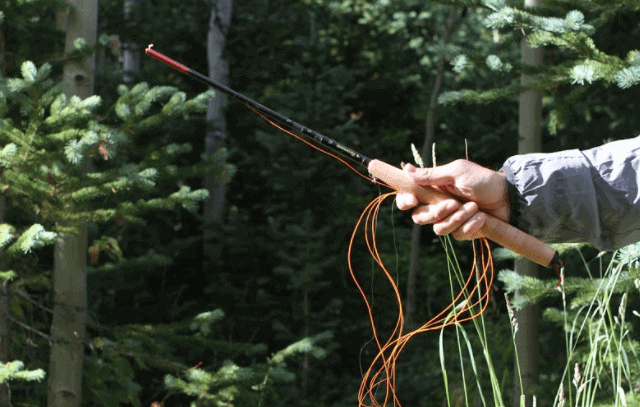
Tenkara rod with leather grip and wood

What are the chances?

The other highlight of day 3 was our dinner. In what is becoming a regular point of homage in my trips to Japan, we visited the Maruhachi ryokan. It is always a feast there and the ambiance very pleasant. This was Margaret’s first time and I was excited to finally bring her over. I could say the dishes even tasted better because of her presence, but the addition of “Uruka”, a.k.a. fermented ayu (fish) intestines to the menu may diminish the truth in that statement.

Ayu, a.k.a. “sweet fish”, is a type of fish found in the streams of Japan (as well as Korea, China and Taiwan). It’s a delicious fish and very prized for its delicate meat, with a subtle, and some say slightly sweet flavor. The ayu graze on algae that grows on rocks, and its guts are thus edible (some even think of the guts as a delicacy). Typically Ayu are cooked shioyaki-style (sea-salt coating the skin and roasted) and every part of it can be eaten.

Just when I had grown accustomed to eat natto (fermented soybeans, and ubiquitous in Japan) I am presented with something even gnarlier:  fermented ayu intestines (uruka). Uruka is very rare and considered to be one of the top 3 most prized delicacies (“chinmi” – delicacies) in Japan. Yes, hard to fathom, I know!  It was not nearly as bad as it sounds (I know it sounds VERY VERY BAD). It was very salty (shopai as Margaret says at the end of the video), and if I had to describe it I would say it was like oyster with lots of salt… and certainly not as appetizing.

Well, to finish on a more “appetizing” note, there is some fishing too! It has been very hot here, hovering in the 90s with super-high humidity. So, Dr. Ishigaki and I decided to have an early start today: 4:30AM. The river was right next to our ryokan and we only had to drive a few minutes to the spots we wanted. But the early start proved to be crucial – though not in terms of fish, he and I only caught one each between 5:00 and 7:00.

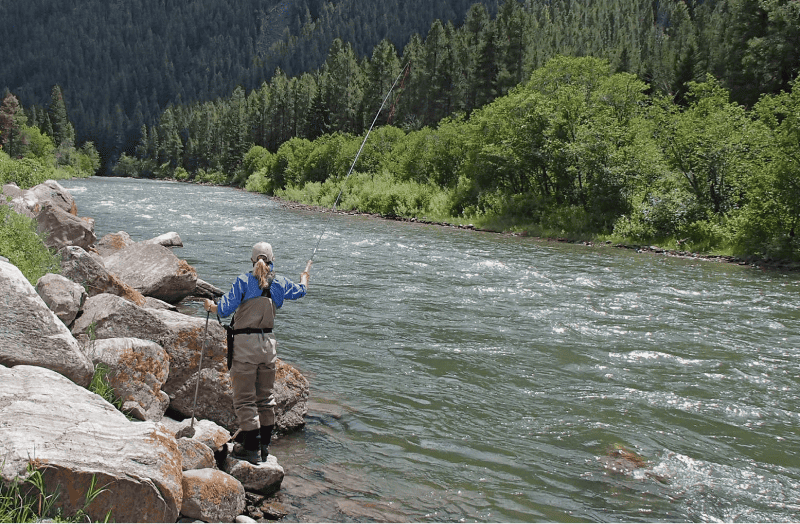
Here are a few images of fishing this morning on the Mazegawa and then one of the tributaries:


Tenkara fishing a tight stream

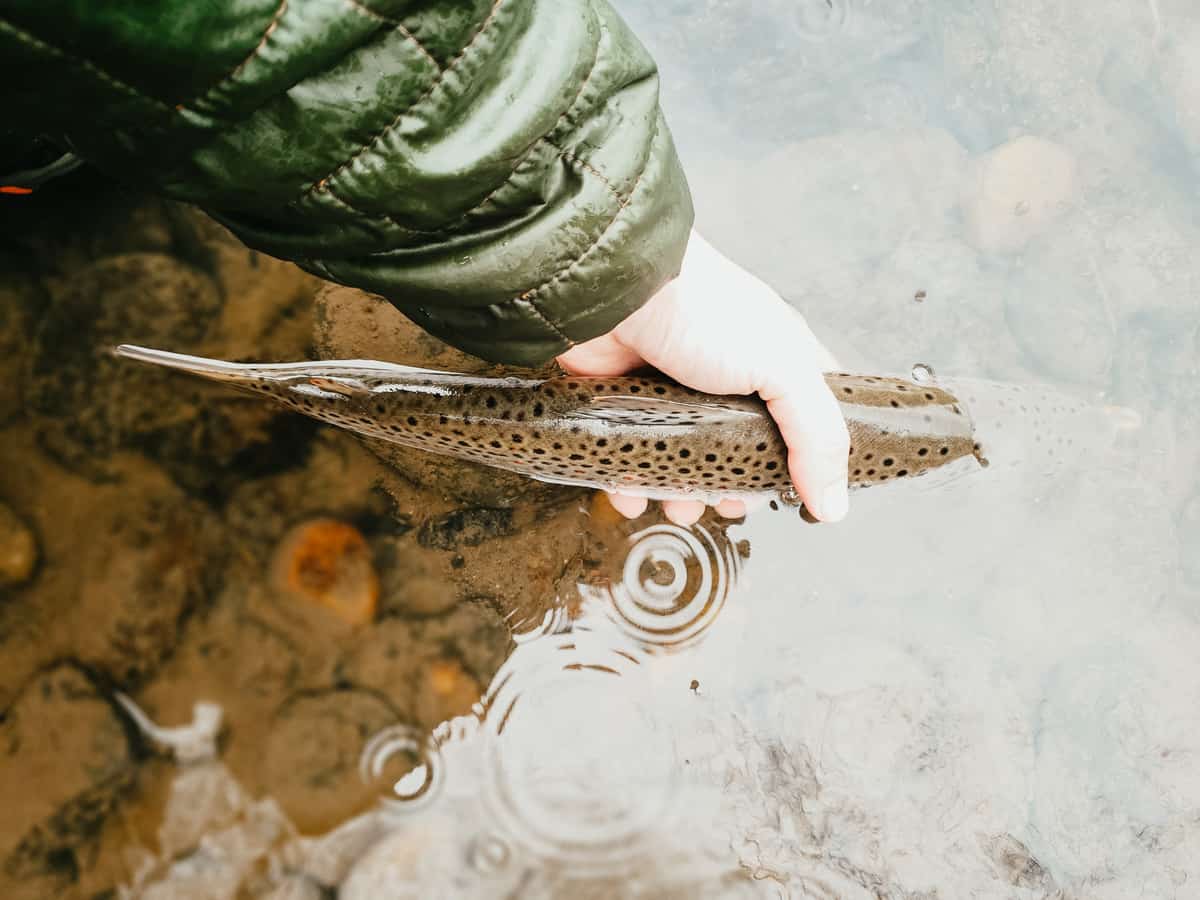
We didn’t catch this one, but here is a recent Iwana taken out of the Mazegawa and put in the Fishing Center’s aquarium, what a way of raising hopes of poor anglers. It certainly makes me want to go fishing early tomorrow. It was roughly 20 inches long.

Large Iwana

Print

July 09 2012

How to Choose the Right Tenkara Rod

Written by Daniel & Jason 

The number one question we are asked by new tenkara anglers is, “which rod should I get?”  It certainly can be confusing since tenkara rods come in different lengths and actions. We always like to tell people that they really can’t go wrong, any rod will work just fine. But, in order to assist you with understanding what our rods are designed for, we have put together the video below with Daniel walking trough the entire lineup of Tenkara USA rods. We have also put together the chart below the video, which we hope will help with the decision making process and some pointers about the key aspects of tenkara rods.

Since all Tenkara USA rods will work for most trout fishing and smaller fish scenarios it’s hard to pin each one down to a specific use or to match your exact preference. Further, we believe people will just grow into the rod they get anyways.

It was never our intent to make things more confusing, nor necessarily for people to buy multiple tenkara rods when we developed the 6 rods that are in our current lineup – as a small company things would be MUCH simpler if we only had to worry about managing inventory of one rod model. But, each of the rods in our lineup were developed to fill a specific niche or preference. However, there are certain applications where we believe each model shines and the following table attempts to simplify the rod selection process:

Tenkara Rod Chart - Choosing a tenkara rod

Three Easy Choices

If you wish we offered fewer options, you can easily narrow the choices down to 3 “all-arounder” rods: the 13ft-14ft7in Ito,  the 13ft Ayu, and the 12ft Iwana.

These rods are very easy for us to recommend, with the other rods in the lineup being considered more “specialty” tenkara rods.

The main difference between the Ito, Ayu and 12ft Iwana will be their length. So, if you fish wider streams and are looking for an excellent premium rod the Ito will be a great choice. If you’re fishing wider streams but don’t want to spend as much money on the rod, the 13ft Ayu is a great option. And, if you fish a mix of stream sizes, the 12ft Iwana is a great no-brainer.

If in doubt: just get the 12ft Iwana.

Bigger Fish – two more choices

We have developed two rods with more backbone if you’re always catching fish that are 17″ (43cm): the 12ft Yamame and the 13ft 6in Amago have more backbone and make landing the larger fish a bit easier. The main difference between the two is their length, with the Amago being a better rod for larger and more open streams, and the Yamame being the best tool for smaller streams.

Smaller Streams – one more choice (erhh, two actually)

The last choice in our lineup is if you’re fishing pretty small streams all the time. In that case we offer the 11ft version of the Iwana. You’ll have less reach, but if you’re fishing tighter streams that will be a good choice.

Actually, if you get the Iwana, you also have the option of purchasing a separate add-on handle to transform your rod into its shorter cousin. We only recommend you take advantage of this option after you have been fishing with tenkara for sometime and REALLY wish you had a shorter rod. In our experience it just takes a little getting used to the longer rods, but once you’re used to them they will likely work well.

Some further thoughts on what how we make our recommendations

Length, start here

The first question you should ask yourself is which length is right for the majority of fishing you plan to do.  Generally speaking, we always recommend using the longest rod you can get away with.  This will give you more reach, help you keep more line off of the water and give you more control over your fly (one of the main benefits of tenkara).

A 12ft (360cm) tenkara rod is a very standard length for tenkara. But, if you live near pretty small streams with low, overhanging branches, then a shorter tenkara rod (say 11ft / 330cm) might let you cast more easily under the canopy.

In either case, you should target your rod choice toward the waters you’ll fish the most. AND, keep in mind a longer rod will have the added versatility of giving you reach in more open sections of a stream, while having the ability to be “fished shorter” by holding the rod above the handle and potentially even collapsing one segment. Further, pairing a long rod with a short line is a very effective combination in smaller streams. Both Jason and I usually fish a 13ft tenkara rod (even on small streams) and you might be surprised how well it fishes in pretty tight quarters.

Action, this is more subjective

Action is primarily a personal preference.  Some people prefer stiffer rods, while others prefer softer actions.  There is no right or wrong here.

We tend to prefer softer rods (5:5 or soft 6:4) because they load easily, making for very effortless casting. Softer rods will also protect tippet well. Our rods will lean towards the softer end of the scale as we believe they are the best tool for tenkara. Two of our 6 rods are  stiffer. The stiffer rods will often have more backbone to put pressure on large fish and will be better at precise casting at short distances (though this can be made up for with technique and practice). The Yamame and the Amago, are both stiffer and also have a good deal of backbone and were designed with larger fish in mind.

Tenkara rods are relatively soft compared to western fly rods, and all our rods have soft tips to assist in casting very light lines.  So if you’re used to a fast-action western-style fly rod, you might prefer a slightly stiffer action tenkara rod like the Iwana 6:4, the Yamame 7:3 or the Amago 6:4.


Fish Size, last consideration

All tenkara rods are made for the average trout and other smaller species of fish: 8″ – 18″ (20 – 45cm).

All tenkara rods will handle the occasional 20+ incher (50cm +). So, if your targeted fish size is within those ranges, fish size should have little bearing on the rod choice: ANY ROD WILL WORK FINE.

If you’re constantly catching fish that are over 17 inches (43cm), then we have two tenkara rods that have more backbone (stiffer and with more mass): the Yamame and the Amago. We consider those more specialty rods and they sell very well in places like Montana and Idaho.


With each rod being so versatile, it would be hard to make the “wrong” choice. Hopefully, the chart and video above will help.  If you’re still struggling with which rod is right for you, feel free to post here, or email Jason at Jason@tenkarausa.com. He will be happy to help you make the best decision on your first tenkara rod.

Print