Warehouses in the USA and the UK for shipping within the European Union quickly and with no customs.

FAQ - Choosing a Tenkara Rod - Forum

About Tenkara Tenkara Rods tenkara lines tenkara videos tenkara flies

April 23 2013

Iwana = “Rock Fish”

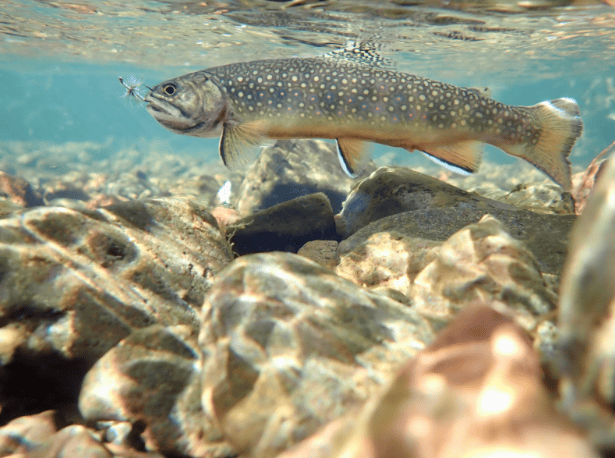
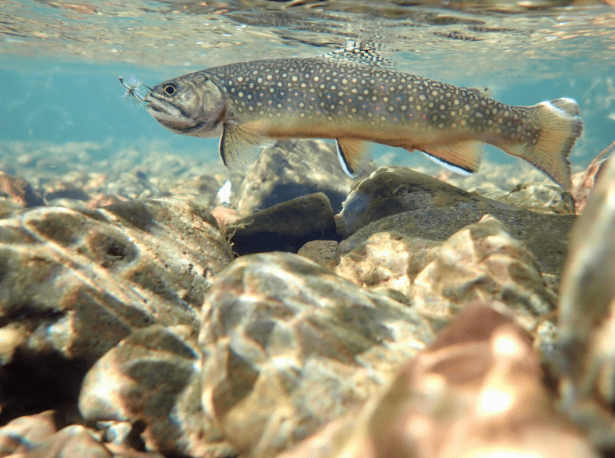
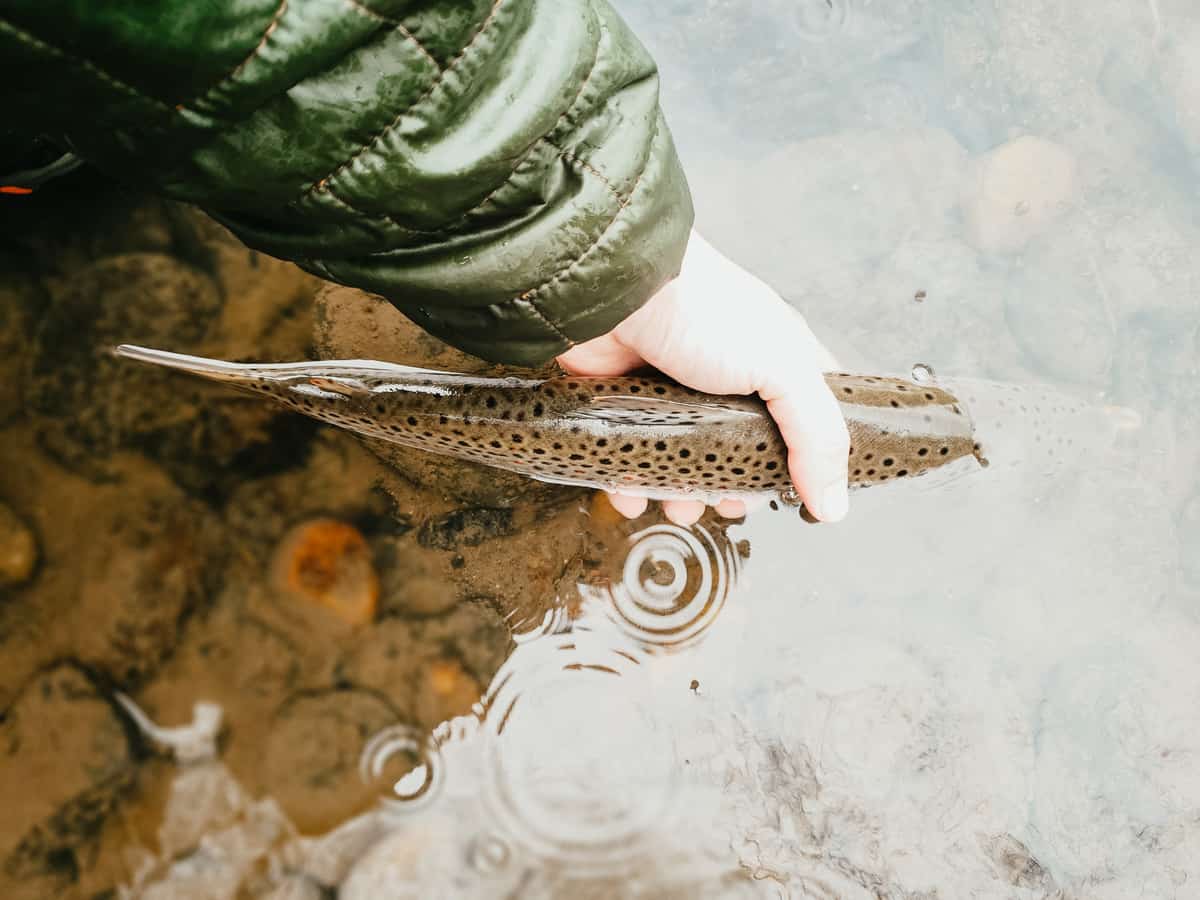
This is the photo of a Japanese char, the Iwana, which I took on one of my trips to Japan. Iwana translates roughly as “rock fish”. Aptly I caught this guy on the Tenkara USA Iwana rod. It is said they can “walk” on rocks to get back to the water, and legend has it that they can use that ability to cross paths and get on different waters if their stream is drying up. I can vouch that they can use their fins to stand, though I haven’t yet seen one walk from one stream to another.

Print

April 03 2013

Tenkara flies map

I’ve been working on a project that will take me a while to complete, I actually started it almost two years ago,  inspired by Mr. Yoshikazu Fujioka’s website (my tenkara flies teacher) and incorporating flies from people I have met in Japan. It is starting to look cool. It is a map of Japan with tenkara flies from different areas. As I learn of new flies, and go through the flies gifted to me in my travels to Japan, the map will become fuller. I hope it will serve as a useful resource.


View Tenkara Flies in a larger map

Print

March 02 2013

Sport Fishing Sustainability in Japan

Two years ago I spent 2 months in the small mountain village of Maze, Japan. I was seeking to learn all I could about tenkara in what could be considered the cradle of this method of fishing. Stories of my visit to Japan (and anything Japan related) can be found here.  But, I was often disheartened by the unsustainable approach to sport fishing in most streams and rivers in Japan.

Streams and rivers in Japan are treated as put-and-take fisheries, where the cost of the fishing license for a particular stream is often compared to the cost of fish in the market and seen as a cost to be recouped by keeping as many fish as will pay for the license. This is obviously not sustainable, as it was made clear when we had to load buckets of fish onto a section of the Maze river (Mazegawa) in preparation for a fishing class.

Tenkara fishing sustainability in Japan

I have taken it on as a side project to inspire change in the way Japan thinks about its rivers in a modern society. I feel indebted to the Maze village and the Mazegawa, where I was hosted with open arms for 2 months. That is where I’m starting. I can can see there is a very long road ahead, and this will be a lifelong project, but I was encouraged when I was asked to write for the local newspaper what my thoughts for the Mazegawa were. It was published a few weeks ago and I just received my copy with “Part 1″ of a series of articles I plan . I’ll share the article I wrote below.

Read the rest of this entry »

Print

September 24 2012

A Tribute to Yukihiro Yoshimura – tenkara net maker

Yukihiro Yoshimura was likely the most skilled tenkara net craftsman the world has ever seen. With over 45 years of experience in making tenkara nets, he had honed his craft and mastered the skills needed in making consistently stunning “tamo” (or nets for tenkara fishing). Certainly the most stunning and well-made nets I have seen. Mr. Yoshimura was the heir of the Mankyu tackle-shop, a 5th-generation (about 250-year old) tackle store which he turned into a net-making business in the 1970s.

Read the rest of this entry »

Print

September 09 2012

The Sasaki Kebari
Hiroto Sasaki of Sansui shows us his tenkara fly

Today is my last day in Japan. Margaret and I returned to Tokyo yesterday to spend time with some friends before we leave to China tomorrow morning. I decided to stop by the Sansui store again and say hi to Mr. Sasaki before we left. As we entered the store it looked like he was tying tenkara flies on the counter. It turned out he was putting together some rigs for ayu fishing. The conversation obviously turned to tenkara flies, and with me asking if he would tie a tenkara fly for the camera. He was a bit shy about it at first, saying he considers himself a “beginner” fly-tyer, but he eventually agreed. I captured this film in one go as he was still working and customers were coming through the door as we worked on the video. It was also edited as quickly as I could as it was a full day and we depart to the aiport in about 5 hours.

One of the most interesting parts of the way he ties his tenkara flies is the way he finishes them. He uses what he calls a “tokkuri” knot, which I was not familiar with. Also, the video is a reminder that not all tenkara flies are in the “sakasa” style. Tenkara flies come in a variety of patterns, the sakasa (or reverse-hackle) being the most characteristic ones but certainly not the only ones.

I hope you will enjoy this video.


Print

September 07 2012

Where tenkara became concrete for me

Tenkara at Japanese fishing store

Margaret’s grandfather and I at the store where it all started

Just about four years ago, this was the store where I purchased my first tenkara rod, and tenkara became real for me. It is in Yamagata, Japan, and my wife’s grandfather took me there. He is not a fisherman, but patiently waited as I browsed the store and talked to the staff about a topic I am passionate about. I told my grandfather-in-law that that visit has changed my life and his grandaughter’s in ways we could not have predicted. I could now make a living because of that visit, and that now we have a good excuse to visit them regularly. I told him I was very thankful for him taking the time to take us there and patiently waiting.

A couple of days ago I visited the store again wanting to relive the discovery in a way.

The year before discovering tenkara in person, I had researched the topic a fair amount. I knew the rods were telescopic, that flies were used, that there were a couple of lines, etc. But, it took holding the first rod in my hand to have a sensation I had not experienced before. It was an interesting mix of nostalgia and discovery, two feelings that could be considered an oxymoron if found in the same sentence. Nostalgia because the simplicity brought me back to my childhood days of bait fishing with my dad’s telescopic fiberglass rods and bait for tilapias in Brazil. Discovery because despite the research it now clicked, and because it dawned on me that fly-fishing really could be done with a telescopic rod and no reel – a thought that I probably had a hard time accepting before this visit.

Upon reflection it makes me wonder if I should concentrate more on putting our rods in the hands of more people, so they could have the same feeling I did. But, on the other hand, it looks like people are discovering tenkara and feeling nostalgia and discovery despite not visiting this same store. Everyone will feel different emotions upon the discovery of tenkara, and yet another feeling once they try it.

Personal experiences are hard to share. Just like tenkara will be done in a variety of ways, everyone will have their own version of discovering it. Those stories have been shared widely in different blogs on “my first time tenkara fishing” and are delightful to read.

Print

September 07 2012

The Fly Tying Kids of Maze

In 2011 I taught a kid in Maze, a village in Gifu, Japan, how to tie tenkara flies. Kyosuke was his name. He really enjoyed the craft and pretty soon started teaching it to his friend Taichi. They took to it pretty quickly and were soon tying tenkara flies just for the fun of it.
Earlier this year, my host Ikumi and Rocky sent me pictures of the kids of Maze tying tenkara flies at the Mazegawa Fishing Center (Mizube No Yakata). They seemed to be having a ball. I was super proud when I got those pictures.
They continue tying tenkara flies and spreading tenkara fishing to their friends. Most kids in the area had no idea what tenkara was when I visited in 2011, now it may be turning into part of their regular conversations. Tenkara introduced to Japan…from the US. Here’s a fun video I put together of some of their tenkara fly-tying experience:

Print

September 04 2012

Kumazaki Kebari – Tenkara Fly Tying Video
Tenkara Flies on Wednesdays (?)

Tenkara Flies on Wednesdays is back? On a Tuesday??? I’ll be less US-centric time-wise for this post. By the time the post is up on our site, it will be Wednesday here in Japan, so I’ll run with it.

One of the things I had promised you to do on this trip was to cover some fly-tying with our friends in Japan. Yesterday was our last day in the Maze area, and while there wasn’t as much time as I had hoped to cover tenkara fly-tying, I made a point to ask my friend Shintaro Kumazaki to demonstrate his go-to tenkara fly. Shintaro grew up fishing. His father did tenkara before him, and his parents have owned the tackle shop in town for the last 12 years. Also, he’s practically next-door neighbor with the famed Katsutoshi Amano (by the way, this post and video of Mr. Amano are a must-see if you are interested in tenkara and tenkara flies). Shintaro has taken a much stronger interest in tenkara when I was visiting last year. He certainly caught the tenkara bug when we embarked on an epic trip fishing and canyoneering in search of wild iwana.

On another note, Shintaro and I had a very enjoyable afternoon session of tenkara fly-tying last year when i was visiting. The small picture to the right, which says “SHARE”, is of Shintaro tying a tenkara fly for me last year >;>;>;>;>;>;>;>;>;>;>;>;

After we were done with sawanobori (shower-climbing) and fishing yesterday, we headed over to his parent’s tackle shop (/pottery store) in Hagiwara, where he had his fly-tying station ready to go. I hope the film I shot (hand-held, and edited in my last 3-hour train ride) will please you.

nd

Print

September 03 2012

Deep pools of content to come; shallow riffles for now.

There is no way around it, it is very difficult to post about things as they happen when things are happening fast and the days are packed. It’s about 11:30PM right now and I finally was able to sit down. Among emails to respond to, the wish to review all the pictures and videos I have been capturing and the utmost desire to crash for the night, I’m left with three choices: writing quickly about several things that are happening (and hope to elaborate on them a bit more in a few days); try to write a more developed post about one topic (difficult to do when I’m tired); or not write at all. So, here goes a quick recap of the last couple of days.

Yesterday we got to spend a fair amount of time witnessing two unusual methods of catching the local Ayu. One is called takuri, which is diving for ayu and capturing them with grapple hooks. The other was done at night time, where the locals showed us an old method of catching large quantities of ayu in which they place large torches in different points of a large river pool; a net is stretched out in the middle of the river, and then the local fishermen will wave the torches, throw rocks in the water, etc, to scare the ayu toward the net. The method is no longer common practice, but done as a special event to maintain the tradition. Yesterday tour agents from throughout Japan showed up at the fishing center to observe it and hopefully add the attraction to their tours. They arrived in the middle of a huge downpour – though luckily the torches remained lit. Net fishing is certainly not a sport fishing activity, and not our cup of tea. Takuri fishing was VERY much a sport, and very unusual. Both were a fascinating demonstration of the inventiveness of humans when it comes to the activity of catching fish.

Takuri fishingNight fishing for Ayu Hiburi

With the rains we have been experiencing here Margaret and I also spent sometime indoors yesterday. Luckily our “indoors” was the vast resource of the Mazegawa Fishing Center (Mizube no Yakata). As Margaret worked on emails, I browsed some books describing the variety of fishing methods in this country. Brain candy for sure! The illustration below is of a method called “tomozuri” for catching ayu, in which a live fish serves as a decoy to attract the wrath of another ayu, whose territoriality will prove to be its fate. The attacking fish is then hooked in the trailing hook and it will then become food.

Tenkara USA at work

tomozuri

Today we took a bit of a more adventurous path in our journey. I took Margaret on a “shower-climbing” and fishing trip. We rappelled down a 30ft waterfall to an otherwise inaccessible place. I had been to the top of these waterfalls numerous times when  I was here last year but never down to the good-looking and hope-inspiring spot below. Today I got to fish it, though lack of access did not mean superb fishing. We swam around the river as well to find fish below the surface, but the water was a bit murky from the rain in the last couple of days.

Rappelling a waterfall for fishing - sawanobori shower-climbing

Fishing an isolated canyon with tenkaraAmago caught on tenkara

This is a beautiful, although small amago from Mazegawa.

After our shower-climbing expedition we hit one more spot in hopes of being rewarded with plenty of amago or iwana. None took our flies, not a bite! But, I did capture some good video of my friend Shintaro Kumazaki and really enjoyed the company and watching his technique. I’ll try to post the videos I took of him pretty soon.

Tenkara fly fishing in Japan

After fishing I asked Shintaro if he’d be willing to tie one of his tenkara flies for the camera, and he agreed. Shintaro’s parents own a tackle shop in Hagiwara. He has been tying tenkara flies for sometime now and actually sells them for ¥350 (about $4.5 per fly). We headed over to their store and Shintaro showed us how he ties his main fly. Video to come soon.

Shintaro Kumazaki tenkara fly

Of course, the day would not be complete without …a visit to the onsen (hot springs). No photos of that, but man, was that ever good after such a packed day!

Print

September 02 2012

Fishing Kids of the Mazegawa

Today I’d like to share one of the memorable moments of this trip so far that does directly involve my wife or I. It was the sight of three young boys going fishing because they love it! As we took a break yesterday, Margaret spotted the 3 young boys speeding towards a stream that runs next to the fishing center. It was raining, and most kids elsewhere would probably be engaged in a video game. Instead, one was wearing a wetsuit and the others tagged along.

It was clear, even from a distance, that they were going somewhere with a purpose. I’m sure they see fishing as fun nowadays because they saw someone in their family doing it, and it was probably intuitive to them because someone taught them how to do it. Yet, yesterday, nobody suggested they go fishing. No one tried to make fishing easier for them, and no one had to convince them that fishing was “fun”. They live near the water and the streams and rivers in the area are their playground.

Pretty soon I’ll be writing about why one of the boys was wearing a wetsuit and the type of fishing he was going to do (a method called takuri). For now, I just hope the images can bring you the fun I had in seeing them going out on their own. We also got to enjoy the catch later on, some great ayu cooked shioyaki style.

Three kids going fishing

Three kids after fishing - eating their fish

Three kids after fishing: eating their catch

Three kids eating their fish

Print

August 31 2012

Japan, Day 3 and 4: Gyotaku, Museum tenkara rod
…and fermented Ayu guts (ewwww!)

By the title of this post, you know there is something disgusting to come, and I’ll save that for the end. The last couple of days were very enjoyable, with some great experiences. A bit too much for a single blog post, but I want to stay on top of it and write as the memory is fresh. We are going fishing for ayu in about 20 minutes (if the rain stops, that is), so please forgive any errors. And, by the way, there are pictures of fishing at the end.

The main plan for yesterday was to meet with a renowned rod maker. We started our trip early as Dr. Ishigaki mentioned he wanted to show me a fishing store in the area we would be visiting. Visiting this second fishing store was certainly worth the stop. As we parked the car, it was instantly clear this was a fishing store. There were fish prints everywhere on the windows. Upon closer inspection I realized they were all gyotaku prints. If you’re not familiar with gyotaku here is a good introductory post.

Gyotaku prints

I wondered what that was all about. Was it from customers trying to show their catch in an artistic way (similar to the fish photos we may see in stores elsewhere)? Were gyotaku particularly popular in this area? There were dozens and dozens of them (probably the low hundreds) and the inside of the store was adorned with more of them. While the outside featured gyotaku prints of trout and ayu (a local species of fish), the inside had larger fish such as tai and tuna, printed on beach-towel-sized paper. I didn’t think much about it and went on to browse all the cool things they had there, a great variety of hooks for ayu and tenkara, as well as ayu rods, and of course their tenkara rods. Margaret, not as interested as I am in all the fishing tackles, started a conversation with an older man who worked at the store. Soon she learned he was the person behind each one of the gyotaku prints we saw. His name is Akira Yokota.

Gyotaku master

I should probably have asked more questions – such as how long he’s been doing it – regretfully I didn’t. But, we did learn that customers from the region came to him with their fish in hand to record their catch and that a couple were caught with tenkara. It is, after all, similar to how we see pictures of fish on the walls of fishing stores elsewhere – just a little different.

The second part of the day was the meeting with a rod maker and his staff. The meeting was very productive though I’ll have to save you from that boring stuff. The real exciting part happened about half-way through the meeting. I saw the rod maker stepping out of the room and coming back with a tenkara rod in his hand. As I was engaged in a conversation with the rest of his staff, I didn’t pay any attention to it. Until, out of the corner of my eye, I caught a glimpse of a couple of unique features of the rod. I recognized it instantly.

A couple of months ago I was visiting Montana (and fishing of course) and learned the FFF museum in Livingston had a couple of tenkara items in their exhibit. Obviously that became a mandatory stop. There it was, a full tenkara set of rod, line and flies, hanging on the wall. Here’s a picture of the set.

Tenkara set at Livingston FFF Fly fishing Museum

This was a very unique rod, with wooden ends on the handle area, and a leather-wrapped grip. It was also a short rod when collapsed. And, thus I recognized it easily and quickly.

I stopped in my tracks: “Ohhhh! I know this rod! Have you been to Montana?”. It turns out he had and that was the exact same rod! I pulled my cell phone out to show him the picture above. Needless to say he was happy to see that image. Unexpectedly he said that he brought the rod in because he wanted me to have it.He never expected such dedication to a method of fishing that most Japanese do not know about to come from the US. It was a esteemed rod to him, about 30 years old. He said he was planning to eventually give it to Dr. Ishigaki, but, especially after I showed him the picture, he thought I should have it. I am not sure what I will be able to do to thank him. This was a super special gift, he has no idea!

Tenkara rod with leather grip and wood

What are the chances?

The other highlight of day 3 was our dinner. In what is becoming a regular point of homage in my trips to Japan, we visited the Maruhachi ryokan. It is always a feast there and the ambiance very pleasant. This was Margaret’s first time and I was excited to finally bring her over. I could say the dishes even tasted better because of her presence, but the addition of “Uruka”, a.k.a. fermented ayu (fish) intestines to the menu may diminish the truth in that statement.

Ayu, a.k.a. “sweet fish”, is a type of fish found in the streams of Japan (as well as Korea, China and Taiwan). It’s a delicious fish and very prized for its delicate meat, with a subtle, and some say slightly sweet flavor. The ayu graze on algae that grows on rocks, and its guts are thus edible (some even think of the guts as a delicacy). Typically Ayu are cooked shioyaki-style (sea-salt coating the skin and roasted) and every part of it can be eaten.

Just when I had grown accustomed to eat natto (fermented soybeans, and ubiquitous in Japan) I am presented with something even gnarlier:  fermented ayu intestines (uruka). Uruka is very rare and considered to be one of the top 3 most prized delicacies (“chinmi” – delicacies) in Japan. Yes, hard to fathom, I know!  It was not nearly as bad as it sounds (I know it sounds VERY VERY BAD). It was very salty (shopai as Margaret says at the end of the video), and if I had to describe it I would say it was like oyster with lots of salt… and certainly not as appetizing.

Well, to finish on a more “appetizing” note, there is some fishing too! It has been very hot here, hovering in the 90s with super-high humidity. So, Dr. Ishigaki and I decided to have an early start today: 4:30AM. The river was right next to our ryokan and we only had to drive a few minutes to the spots we wanted. But the early start proved to be crucial – though not in terms of fish, he and I only caught one each between 5:00 and 7:00.

Here are a few images of fishing this morning on the Mazegawa and then one of the tributaries:


Tenkara fishing a tight stream

We didn’t catch this one, but here is a recent Iwana taken out of the Mazegawa and put in the Fishing Center’s aquarium, what a way of raising hopes of poor anglers. It certainly makes me want to go fishing early tomorrow. It was roughly 20 inches long.

Large Iwana

Print

August 29 2012

Japan, Day 2: Intro to Telescopic Rods and Tenkara Rods

Yesterday several of you requested to learn more about the different telescopic rods available in Japan. There is an incredible variety of fixed-line methods of fishing in this country. Different telescopic rods which are designed and manufactured with specific purposes in mind. Yet, these are largely unfamiliar to most people.

Based on your requests, I decided to revisit the Sansui store in Tokyo today. I changed some plans, took a long bus ride, then a subway ride and walked for about 15 minutes in sweltering heat with a camera hanging on my neck just for you! I showed up at the Sansui store which specializes in fixed-line methods of fishing to give you an overview of the different telescopic rods used for fresh-water fishing. Please keep in mind that even though I show you about 9 different types of rods in this video, there are probably twice as many kinds of telescopic rods. Hopefully this will help clarify a bit what the different rods are made for: not all telescopic rods are created equal. Please forgive if the quality of the video is not that great or if there are no subtitles, but this was shot just a few hours ago, and the editing done quickly.

As for the rest of the day: after visiting Sansui it was time to take the bullet-train down to Nagoya where Margaret and I would be visiting Dr. Ishigaki.

We spent a good amount of time at his “tenkara-heya” (tenkara room). I was in awe at his collection of old and new tenkara rods, tenkara nets, tenkara flies and other relics. It was quite a treat to spend time there. We discussed rod design, going through 30+ year old tenkara rods and the modern ones as well as prototypes I’ve been working on. And, we talked about all the flies he had displayed in his “tenkara museum”. Here are a couple of pictures from this evening:

Daniel Galhardo and Dr. Ishigaki at the tenkara room

Dr. ishigaki showing different tenkara rods

Tenkara flies

A 30+ year old box of tenkara flies that Dr. Ishigaki cherishes.

We joined Dr. Ishigaki and his wife at their home for a delightful dinner consisting of several small dishes (which is by the way one of my favorite things about Japanese cuisine and my favorite way of eating – as long as I don’t have to do the dishes).

Dinner with Dr. Ishigaki and his wife

Time to hit the hay now, for a day of meetings and travelling tomorrow.

Print